Quantum computing sits in one of the strangest places in modern technology.
Depending on which headline you read, it is either:
- on the brink of destroying encryption,
- about to cure disease and reinvent chemistry,
- or massively overhyped and destined to disappoint.
The truth — like most important truths in technology — is quieter, slower, and far more grounded.
Quantum computing is real.
It is advancing.
And someday, it will change important parts of science and industry.
But it is not magic, and it is not arriving tomorrow.
This is a technology that asks us for patience — and honesty — in a world that prefers speed and hype.
1️⃣ Why quantum feels confusing
Part of the confusion comes from how quantum computing is talked about.
Press releases celebrate milestones.
Investors emphasize disruption.
Social media flattens everything into:
“Quantum is going to change everything overnight.”
Meanwhile, inside labs, researchers are working with machines that:
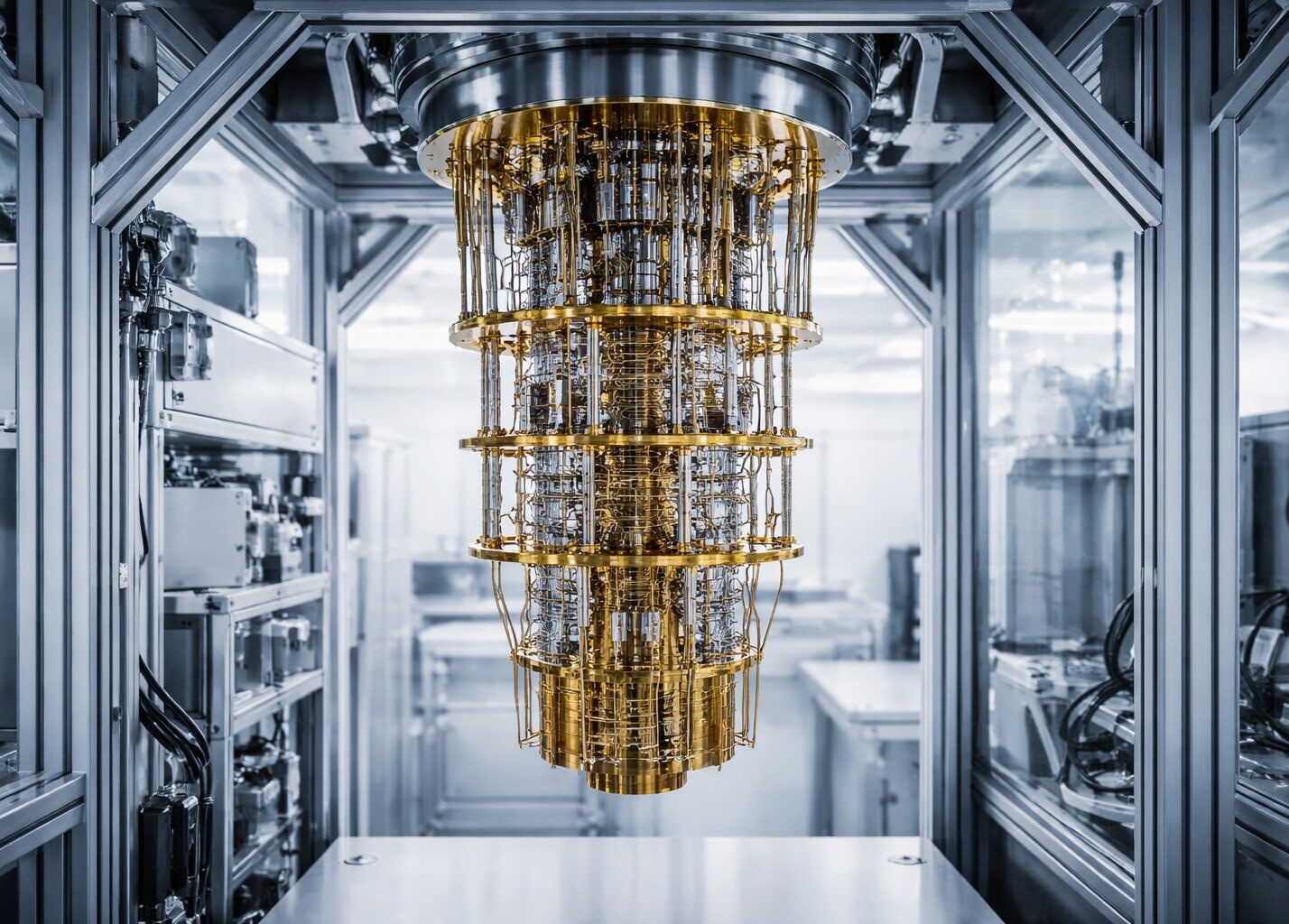
- sit in massive refrigerators near absolute zero
- require delicate calibration
- lose information incredibly fast
- fail frequently and unpredictably
Those realities rarely make headlines.
So people are left with two extremes:
“Quantum will save the world.”
“Quantum is fake.”
Neither is true.
Quantum is simply hard — harder than almost anything computing has tried to do before — and we are still in the very early chapters.
2️⃣ What a qubit actually is
A normal computer stores information using bits:
0 or 1.
A quantum computer uses qubits, which behave according to the rules of quantum physics. A qubit can exist in what physicists call a superposition — a blend of possibilities.
A simple way to imagine it:
- A classical bit is like a coin lying flat: heads or tails.
- A qubit is like a spinning coin: temporarily both, until measured.
That “spinning” state allows quantum systems to explore many possibilities at once — but the moment you observe it, the coin must land. And during that entire process, the qubit is incredibly sensitive.
A slight vibration, a temperature fluctuation, a stray electrical field — and the information is gone.
That fragility is the heart of the engineering challenge.
3️⃣ Physical vs logical qubits
Here is where headlines and reality start to drift apart.
Companies proudly say:
“We now have 1,000 qubits!”
But those are physical qubits — raw, noisy, unstable.
To get one useful, reliable logical qubit, researchers may need:
- hundreds
- or thousands
- of physical qubits working together
Logical qubits are the ones that behave predictably long enough to perform meaningful computations.
So when someone hears “1000 qubits” and imagines dramatic breakthroughs…
What it often means in practice is:
“…we are getting slightly closer to one or two stable logical qubits.”
Progress — yes.
Revolution tomorrow — no.
4️⃣ Why error correction is the real bottleneck
In quantum computing, error correction is everything.
Because qubits are fragile, they constantly:
- drift
- lose coherence
- introduce noise
- collapse into wrong states
Error correction techniques try to detect and fix those mistakes faster than they accumulate.
But there’s a catch:
✔️ Correcting an error requires more qubits
✔️ More qubits introduce more noise
✔️ More noise requires more correction
It becomes an engineering balancing act.
This is why some of the most important breakthroughs today aren’t about “bigger machines,” but:
- better qubit stability
- improved materials
- smarter correction schemes
- more realistic algorithms
It’s slow, precise, deeply technical work — and it matters more than marketing-friendly milestones.
5️⃣ IBM, Google, and the race — what they’re really racing toward
It’s tempting to think IBM, Google, and others are chasing:
“Who gets the first real quantum computer?”
But the race is more layered.
They are racing to build:
- the most stable qubit architectures
- reliable error correction strategies
- programming frameworks
- cloud infrastructure
- developer ecosystems
- education and training pipelines
Because when quantum eventually becomes useful, it will likely live in the cloud — like a specialized scientific supercomputer — not on your desk.
In a sense, they’re building the highway while the cars are still prototypes.
That may sound premature — but when the breakthrough happens, infrastructure will determine who leads.
6️⃣ What quantum will not do
This part matters, because myth tends to fill empty space.
Quantum computers will not:
- ❌ replace laptops
- ❌ make Excel faster
- ❌ run normal software
- ❌ magically create sentient AI
- ❌ instantly break the internet overnight
Quantum excels at specific categories of problems, particularly those involving:
- chemistry and molecular simulation
- new materials discovery
- optimization problems
- cryptography research
- complex probability modeling
It’s more like a scientific instrument — closer to a microscope than a replacement CPU.
7️⃣ Where quantum probably matters first
When quantum does reach practical usefulness, expect early wins in fields like:
1.🌿 Medicine & pharmaceuticals
Modeling complex molecules directly instead of approximating them.
2.⚡ Materials & energy
Discovering new superconductors, batteries, catalysts.
3. 🚚 Logistics & optimization
More efficient routing, shipping, scheduling.
4. 🔐 Cryptography
Developing new secure systems while studying old ones.
These are not flashy social media moments.
They are slow, industrial, deeply technical transformations.
Exactly the kind that quietly reshape economies.
8️⃣ How AI & quantum intersect — realistically
There is a lot of noise about AI + quantum combining into something almost mystical.
The Reality is simpler.
AI will likely help:
- design quantum experiments
- reduce noise
- discover better algorithms
- optimize simulations
- analyze results faster
Quantum may someday help AI with:
- complex optimization
- certain training workloads
- new mathematical approaches
But there is no “god machine” emerging.
AI does not magically understand consciousness.
Quantum does not magically create super-intelligence.
These fields simply strengthen each other in practical ways — tools helping tools.
9️⃣ Why hype hurts — and why patience matters
This is where the conversation becomes delicate.
Quantum research needs funding.
Companies need investors.
Governments need strategic vision.
But hype can bend incentives.
When headlines promise miracles tomorrow:
- researchers feel pressure to oversell
- investors expect unrealistic returns
- critics eventually declare the whole field broken
Some academics worry this cycle could trigger a “quantum winter,” where trust collapses faster than science can demonstrate progress.
Not because quantum computing is fake — but because expectations sprinted ahead of reality.
The healthier story sounds more like this:
“Quantum computing is real, difficult, and moving steadily.
Funding is important — but honesty is essential.
If we chase spectacle instead of truth, we risk starving the very progress we want.”
Patience protects credibility.
Credibility protects the future.
🔟 Closing reflection: technology that teaches humility
Quantum computing forces us to confront something many technologies don’t:
We are working at the edge of physics, where reality behaves in ways our intuition struggles to grasp.
Progress is happening — but the universe refuses to be rushed.
And that may be the most important lesson here.
Some technologies demand ambition.
Quantum demands ambition and humility together.
It will not solve everything.
It will not arrive in one dramatic moment.
But slowly, carefully, over decades — it may help us discover medicines, materials, efficiencies, and insights that simply were not possible before.
Not magic.
Not imminent.