In many organizations today, delivery success still depends on urgency, hustle, and individual heroics.
When something breaks, teams scramble.
When projects slip, leaders escalate.
When systems fail, individuals step in and save the day.
And for a moment, things stabilize.
But a few months later, the same problems return.
After years working across complex enterprise programs — including global transformations, portfolio recoveries, and delivery restructures — one pattern becomes clear:
Projects are often rescued by people — but they are sustained by systems
And the difference matters.
The Hidden Cost of Hero Culture
Most organizations don’t intentionally rely on heroics. It happens gradually.
A strong delivery lead compensates for poor visibility.
A skilled project manager manually coordinates disconnected teams.
An operations expert fills the gaps between tools that don’t communicate.
The project moves forward — but at a cost.
Teams burn out.
Knowledge lives in individuals instead of systems.
Delivery becomes fragile.
If one key person leaves, momentum collapses.
Heroics save projects in the short term, but they make organizations dependent on constant effort.
And constant effort is not sustainable.
The Shift from Performance to Capability
The organizations that consistently deliver well don’t operate this way.
They invest in capability.
The difference is subtle but powerful:
- When systems are weak, people must constantly perform to compensate.
- When systems are strong, teams operate calmly and predictably.
In other words:
Individuals and organizations perform when systems are weak.
They operate calmly when systems are strong.
Mature delivery environments are not driven by adrenaline. They are driven by visibility, governance, and structure.
This shift is what separates firefighting organizations from resilient ones.
Building Delivery Visibility: Tools Matter
Modern delivery complexity demands modern operational visibility.
Tools such as:
- Microsoft Project for structured planning and critical path management
- Dataverse for centralized operational data
- Power BI for real-time reporting and executive visibility allow organizations to move from reactive management to proactive delivery control.
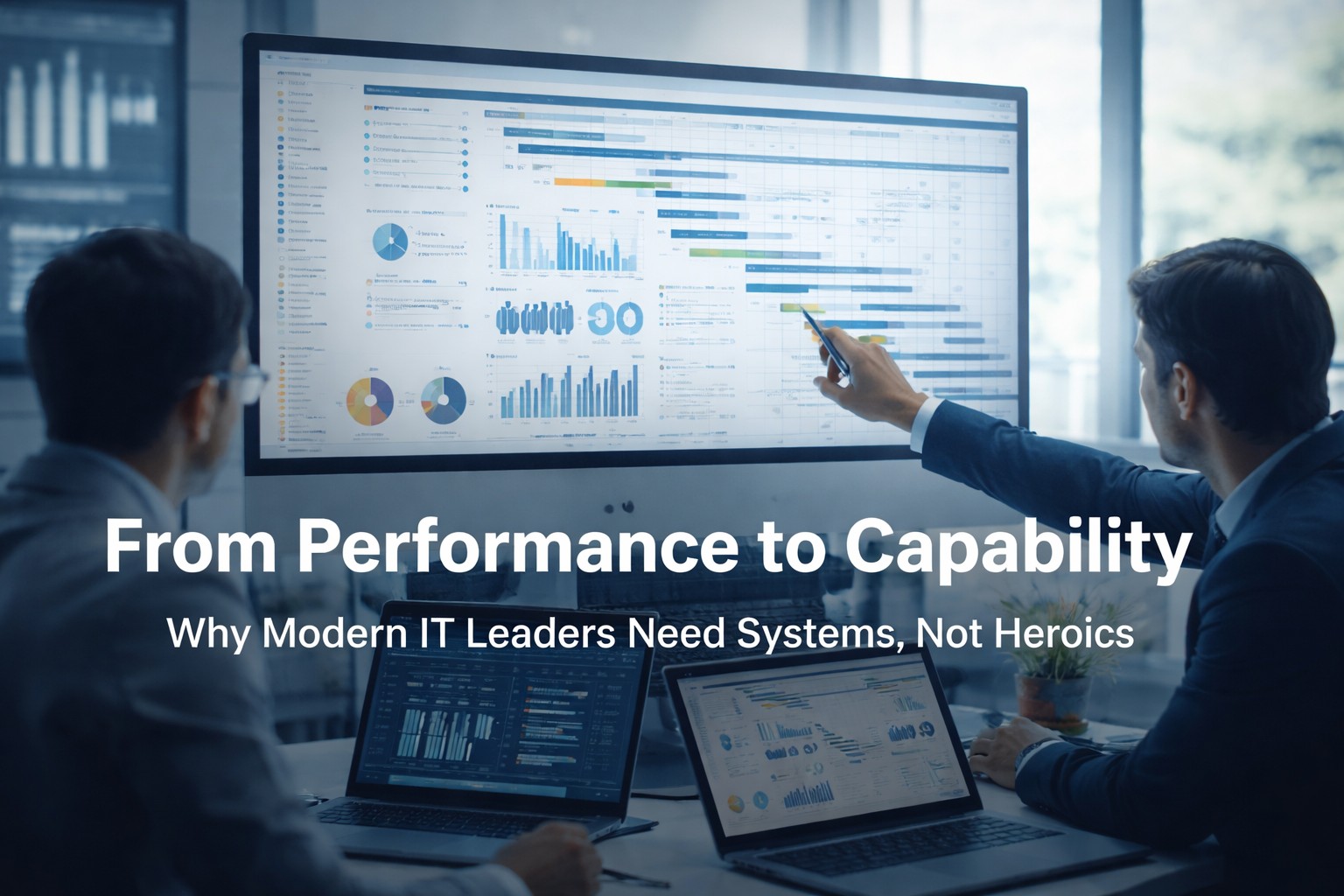
Recently, I demonstrated how a complex program’s critical path, resource allocation, and delivery progress can be tracked live across these systems, creating visibility from portfolio level down to workstreams.
👉PMO Dashboard – Microsoft Project, Dataverse & Power BI
The goal is enabling leaders to make decisions calmly, based on real delivery insight — not crisis escalation.
MYT’s Delivery Philosophy
At Manage Your Tech, Ltd., the goal is simple:
Help organizations move from:
- urgency to clarity
- heroics to governance
- performance pressure to operational capability
Sustainable delivery is not built on constant effort. It is built on systems that allow teams to succeed consistently, without burning out the people responsible for execution.
Because in the end, delivery maturity is not measured by how often projects are rescued.
It is measured by how rarely rescue is needed.
Closing Thought
Organizations don’t need more heroics.
They need calm, visible, well-governed delivery environments.
When the system works, the people inside it can do their best work — without having to fight fires every day.
And that is where real transformation begins.