Modern delivery work does not happen outside the systems that carry it.
It moves through identities, devices, applications, files, workflows, approvals, dashboards, communications, and reporting layers.
That means delivery oversight cannot only look at schedule status, resource assignments, or project dashboards.
It also has to understand the posture of the environment where the work happens.
This artifact builds on the previous MYT Governance Lab work.
1. The first step was platform visibility: understanding what exists, who owns it, where it lives, and how it can be inspected.
2. The second step was delivery control: showing how complex work can be structured through schedules, roles, resources, dependencies, reporting, and governance.
3. The third step was security-aware distributed work: recognizing that when work moves across identities, systems, permissions, workflows, and global teams, governance begins to touch security.
This piece moves one layer deeper.
It asks:
What happens when the systems carrying the work also begin surfacing posture, exposure, recommendations, risk, and response signals?
The PMO Does Not Become the SOC
The PMO does not become the security operations center.
It does not investigate every alert.
It does not remediate every control.
It does not own every configuration, policy, detection, incident, or response workflow.
But modern delivery oversight does need enough security literacy to understand when security posture becomes delivery-relevant.
That can happen when posture affects:
• access
• continuity
• user readiness
• vendor communication
• finance controls
• system availability
• operational trust
• executive escalation
• delivery risk
• operational resilience
The PMO does not need to become the SOC.
But it does need to understand when exposure, recommendations, identity risk, incidents, or response signals could affect the work.
That is the lane for this artifact.
______________________________________________________________________________________________________________________
What Defender Begins to Surface
Microsoft Defender introduces a different kind of visibility.
Instead of only showing whether work is planned, assigned, or reported, it begins to surface posture signals around the environment itself.
In the Defender portal, this can include areas such as Secure Score, users at risk, incidents, device posture, exposure management, recommendations, action areas, threat analytics, and onboarding gaps.
Microsoft describes the Defender portal as bringing together security services to reduce exposure, improve organizational security posture, detect threats, and investigate and respond to breaches.1
In a controlled lab environment, even a small tenant can begin to show the shape of this security landscape.
A delivery leader may not need to act on every signal directly.
But they should understand what the surface is trying to say.
A signal may be technical.
The implication may be operational.
A user risk may affect access.
A recommendation may require planning.
A missing control may affect communication trust.
A device gap may affect readiness.
An incident may trigger escalation.
That is where Defender becomes relevant to delivery oversight.
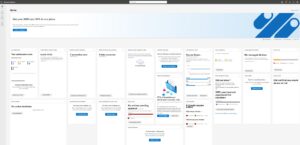
[Figure 1 — Defender posture overview]
A redacted Microsoft Defender home view showing Secure Score, users at risk, incidents, device posture, and security action areas.
____________________________________________________________________________________________________________________
Secure Score as a Posture and Planning Surface
Microsoft Secure Score begins to turn security posture into something visible, measurable, and reviewable.
The score itself is useful, but the more important layer is the structure behind it.
Secure Score can show posture categories, history, comparison, recommended actions, status, score impact, and improvement opportunities.
Microsoft describes Secure Score as a measurement of an organization’s security posture, where a higher score reflects more recommended actions taken. 2
That matters because posture is not just a number.
It becomes a planning surface.
A recommendation may represent a policy gap.
It may involve a configuration change.
It may affect a product area.
It may require ownership.
It may need testing.
It may need to be scheduled.
It may need to be accepted as risk.
It may need leadership awareness.
For a security team, Secure Score can support posture improvement.
For a PMO or delivery leader, the same surface creates a different question:
Which recommendations require coordination, planning, change management, escalation, or delivery awareness?
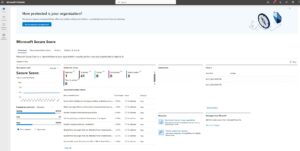
[Figure 2 — Microsoft Secure Score overview]
A redacted Microsoft Secure Score view showing score, posture categories, recommended actions, and history.
____________________________________________________________________________________________________________________
Recommendations as Delivery-Relevant Signals
A recommendation is not just a score adjustment.
It can represent a policy gap, configuration issue, product dependency, affected user group, implementation step, or control decision.
In Secure Score, a recommendation can also include prerequisites, current implementation status, next steps, product context, points achieved, and learn-more guidance.
Microsoft’s Secure Score documentation notes that the implementation section can show prerequisites, step-by-step next steps, current implementation status, and learn-more links. 3
That changes how a delivery leader should read the list.
The security question may be:
What needs to be remediated?
The delivery question may be:
Who owns the action?
What systems or users are affected?
Does this require planning?
Could it affect mail flow, vendor communication, approvals, access, or continuity?
Should it be scheduled, tested, accepted, or escalated?
In one reviewed example, a Defender for Office recommendation pointed toward anti-phishing policy configuration, including mailbox intelligence and impersonation protection.
That type of recommendation sits inside a security product, but the operational implications can reach into business communication, trusted senders, user experience, and finance or vendor workflows.
The PMO does not decide the anti-phishing configuration.
But the PMO may need to understand whether the change affects communications, approvals, training, rollout timing, or operational continuity.
This is where recommendations become delivery-relevant signals.
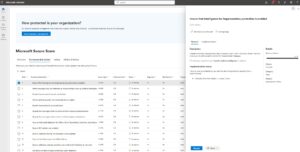
[Figure 3 — Recommendation implementation view]
A redacted Secure Score recommendation view showing how a posture recommendation can include status, prerequisites, next steps, product area, score impact, and implementation guidance.
____________________________________________________________________________________________________________________
From Score to Exposure Landscape
Secure Score asks:
What should improve?
Exposure Management asks a broader question:
Where does exposure exist across the environment?
Microsoft describes Security Exposure Management as providing a unified view of security posture across company assets and workloads, including endpoints, cloud resources, and external attack surfaces. 4
It also notes that insights can include security events, recommendations, metrics, and initiatives.
That broader view matters because modern delivery environments are not carried by one system.
They may depend on:
• identities
• endpoints
• cloud resources
• applications
• SaaS services
• data
• external collaboration
• security initiatives
• critical assets
• vulnerability areas
For security teams, exposure management helps prioritize risk reduction.
For delivery oversight, it creates another question:
Which exposed identities, systems, devices, applications, or cloud resources support active work?
A system can be technically exposed.
But it can also be operationally important.
A user can be an identity signal.
But they can also be a finance approver, vendor contact, deployment lead, or reporting owner.
A recommendation can be security guidance.
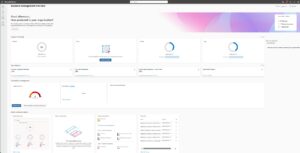
[Figure 4 — Exposure Management overview]
A redacted Exposure Management view showing identity, apps, endpoint, cloud, initiatives, vulnerability areas, and exposure-related metrics.
____________________________________________________________________________________________________________________
When Security Posture Becomes Business Risk
Business Email Compromise is a useful example because it connects security posture to business operations quickly.
This is not only an email-security issue.
In a delivery environment, business email compromise or impersonation risk can affect:
• vendor communication
• payment instructions
• finance approvals
• executive requests
• trusted sender relationships
• sensitive business data
• auditability
• project communication
• decision integrity
In the Defender view, Business Email Compromise / Financial Fraud can appear as an initiative with posture percentage, metrics, recommendations, state, weight, progress, and history.
That matters because a business risk is being translated into security posture components.
The initiative can point toward areas such as impersonation protection, mailbox intelligence, domain and user impersonation settings, phishing thresholds, quarantine handling, external sharing controls, audit logging, and related Microsoft 365 security controls.
Microsoft’s Defender for Office documentation describes anti-phishing policies as including impersonation settings such as user and domain impersonation protection, mailbox intelligence, trusted senders and domains, and safety tips. 5
For a security team, this may be part of posture improvement.
For delivery oversight, it becomes a business continuity and control question:
Which communications, approvals, vendors, users, reports, or finance controls depend on these protections being properly understood and managed?
This is where a security posture signal becomes a business risk signal.
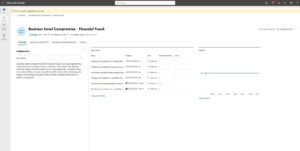
[Figure 5 — Business Email Compromise initiative]
A redacted Defender initiative view showing Business Email Compromise / Financial Fraud posture, metrics, recommendations, and progress.
____________________________________________________________________________________________________________________
The Same People Become Security Signals
The mock delivery model used throughout this Governance Lab included familiar roles:
Sarah Chen supported supply chain and vendor readiness.
Arjun Nair supported operations and deployment readiness.
James Patel supported finance and controls.
Vanan / MYT supported PMO governance, escalation, reporting, and oversight.
In Artifact 3:, these people appeared as delivery resources. (From Platform Governance to Delivery Control: Making Complex Work Visible, Governable, and Executable)
In Artifact 4:, they became tenant identities and governance signals. (When Workflows Become Global, Governance Becomes Security: Why modern delivery oversight must understand identities, access, systems, and distributed work)
In the Defender layer, the same people can become part of the security posture landscape.
That does not mean manufacturing risk.
It does not mean forcing suspicious sign-ins.
It does not mean creating artificial events.
It means recognizing that the same people who carry the work may also appear in systems as identities, access holders, sign-in actors, policy subjects, risk signals, approvers, dashboard viewers, workflow participants, and evidence owners.
A safe way to represent this is through the delivery lens:
| Mock role | Delivery concern | Security posture relevance |
| Sarah Chen | Vendor / supply chain readiness | Vendor communication, external sharing, trusted sender relationships, impersonation risk |
| James Patel | Finance / controls | Payment approvals, financial fraud risk, audit trail, sensitive data |
| Arjun Nair | Operations / deployment | Operational communication, site readiness, continuity |
| Vanan / MYT | PMO / governance | Escalation, coordination, risk visibility, decision support |
This keeps the point honest.
Security posture does not sit outside the delivery model.
It surrounds the people, systems, communications, workflows, and approvals that delivery depends on.
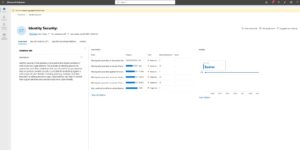
[Figure 6 — Identity Security posture view]
A redacted Identity Security metrics view showing identity as a posture domain within the broader Defender security landscape.
____________________________________________________________________________________________________________________
What MYT Would Look For in SOC / Security Support
This learning also clarifies what kind of security support matters to a business owner, PMO leader, or delivery-governance function.
A useful SOC or security-supporting team member does not only report alerts.
They help the organization understand what matters.
They can separate signal from noise.
They can explain when something is urgent.
They can show what can be planned.
They can identify what needs escalation.
They can distinguish between a technical finding and a delivery-impacting risk.
For MYT, the capabilities that matter would include:
1. Signal discipline
The ability to distinguish noise from meaningful risk.
2. Escalation judgment
The ability to explain what needs attention now, what can be planned, and what requires leadership visibility.
3. Systems understanding
The ability to understand identities, devices, apps, cloud resources, data, workflows, and policies as connected surfaces.
4. Delivery awareness
The ability to recognize when a security recommendation may affect timelines, vendors, approvals, user access, communications, or operational continuity.
5. Calm communication
The ability to explain risk without panic, ego, or unnecessary drama.
6. Evidence-based posture
The ability to point to the signal, recommendation, metric, affected area, implementation state, and remediation path.
That is the kind of security support that strengthens delivery oversight.
The goal is not to create more dashboards.
The goal is to understand which signals require action, planning, escalation, or acceptance.
____________________________________________________________________________________________________________________
Incidents and the Response Layer
The Defender incident view introduces the response layer.
Incidents can organize alerts, severity, impacted assets, investigation state, detection sources, categories, activity, and response work.
Microsoft describes the Defender portal as supporting detection, investigation, and response to breaches, including incidents and alerts. 6
In the MYT lab, the incident page showed no active incidents.
That is still a useful learning point.
Security posture work does not begin only when an incident appears.
Posture, recommendations, exposure, risky users, missing controls, and business-risk initiatives can all matter before the organization reaches an incident-response moment.
For a PMO, that distinction is important.
The PMO does not run the incident.
But it may need to know when an incident affects:
• access
• communication
• executive reporting
• vendor coordination
• system availability
• deployment timing
• regulatory concern
• continuity planning
• stakeholder confidence
In that sense, incidents are not the beginning of security awareness. They are one layer of the response model.
Delivery oversight should understand the posture signals before the response layer is needed.
____________________________________________________________________________________________________________________
What This Proves
This artifact does not attempt to turn the PMO into a security operations center.
It proves something more practical:
Security posture can become delivery-relevant when the systems carrying the work are also the systems being protected.
Defender begins to show this through posture surfaces, Secure Score, recommended actions, exposure management, initiatives, metrics, identity signals, and incidents.
For security teams, those surfaces support protection, detection, investigation, remediation, and response.
For delivery oversight, they create a different kind of visibility:
• what might affect access
• what might affect continuity
• what might affect trusted communication
• what might affect finance controls
• what might affect vendor coordination
• what might require planning
• what might require escalation
• what might require acceptance or remediation
That is where PMO, governance, and security posture begin to meet.
____________________________________________________________________________________________________________________
Closing Thought
Modern delivery does not happen in a vacuum.
It happens inside environments that must be governed, protected, monitored, and understood.
The PMO does not need to own the SOC.
But it does need to understand when security posture becomes delivery risk.
A recommendation may be technical.
An exposure may be architectural.
A risky identity may be security-related.
An incident may belong to the response team.
But if those signals affect the systems, people, vendors, approvals, data, or communications that carry the work, they become relevant to delivery oversight.
Security posture is not separate from delivery when the systems carrying the work are also the systems being protected.
That is the next layer of modern governance.
____________________________________________________________________________________________________________________
[1]Reference text:
Microsoft describes the Defender portal as bringing together security services to reduce exposure, improve organizational security posture, detect threats, and investigate and respond to breaches.
[2]Reference text:
Microsoft Learn, “Microsoft Secure Score,” Microsoft Defender XDR documentation.
[3]Reference text:
Microsoft Learn, “Microsoft Secure Score improvement actions,” Microsoft Defender XDR documentation.
[4] Reference text:
Microsoft Learn, “What is Microsoft Security Exposure Management?,” Microsoft Security Exposure Management documentation.
[5] Reference text:
Microsoft Learn, “What is Microsoft Security Exposure Management?,” Microsoft Security Exposure Management documentation.
[6] Reference text:
Microsoft Learn, “Incidents and alerts in the Microsoft Defender portal,” Microsoft Defender XDR documentation.