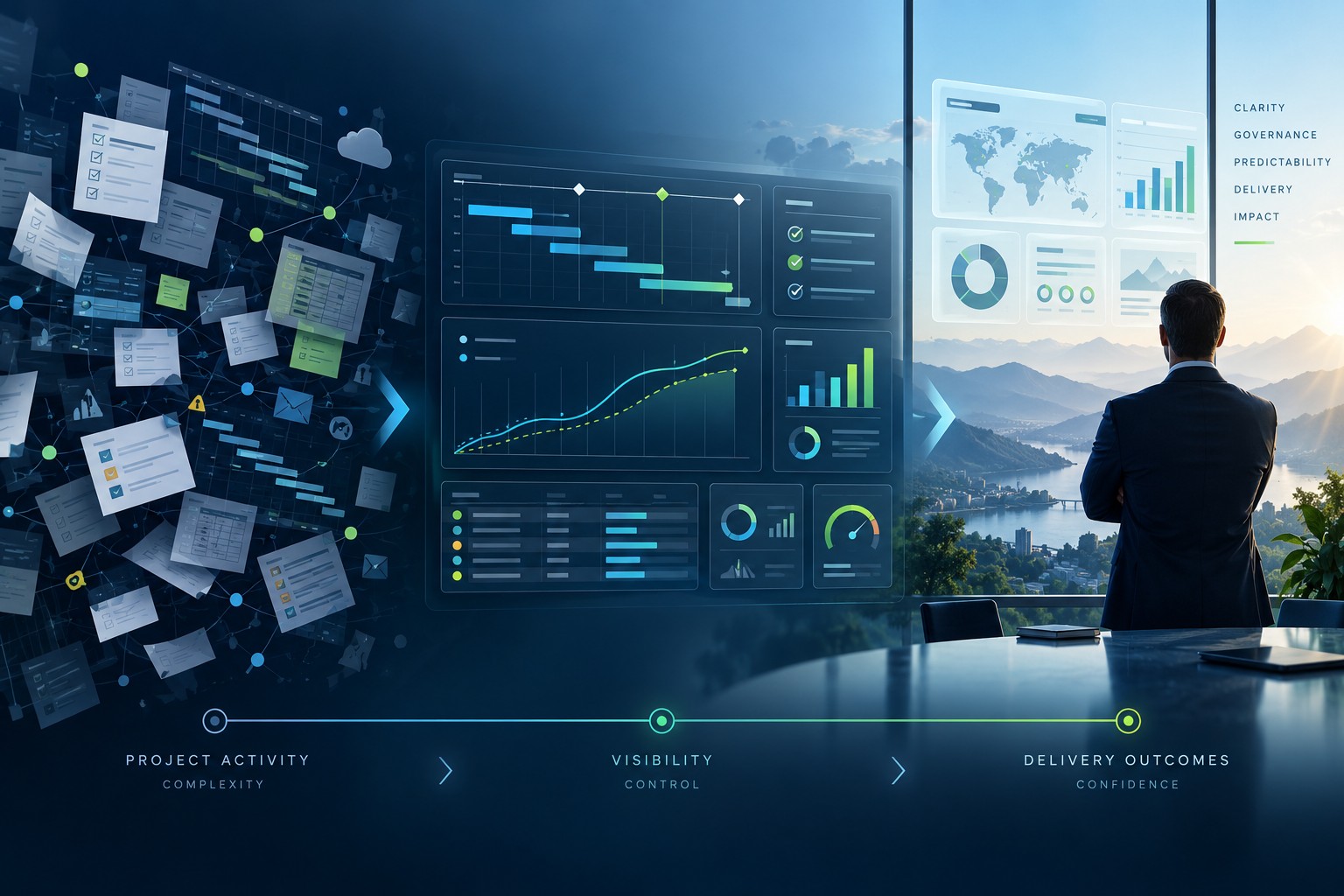

Complex technology delivery environments generate a lot of activity.
Meetings happen.
Schedules are updated.
Risks are discussed.
Reports are created.
Dashboards are reviewed.
Stakeholders ask for status.
But activity is not the same as control.
In complex IT, PMO, governance, and systems-integration environments, the real question is not whether work is happening. The question is whether the work has enough structure, visibility, accountability, and decision support to move forward with confidence.
That is where Manage Your Tech, Ltd. focuses.
MYT supports complex IT delivery environments where scope, systems, governance, reporting, stakeholder alignment, and delivery controls need to be made visible and executable.
These environments may involve enterprise systems, Microsoft 365 and Power Platform, ERP / CRM / SaaS platforms, infrastructure and cloud services, data migration, cybersecurity-adjacent governance, vendor coordination, and modernization or recovery work.
The common thread is not one tool or one platform. It is the need to connect technical work, delivery structure, stakeholder expectations, and decision visibility into something that can be managed.
It means producing practical delivery-control outputs that help teams understand what is happening, what is blocked, what is late, what requires action, and what leadership needs to decide.
______________________________________________________________________________________________________________________
Planning the work: WBS, schedule, milestones, and delivery control
A strong delivery environment starts with structure.
Before dashboards, reporting, or governance forums can be useful, the underlying work needs to be organized clearly. That usually means defining the work breakdown structure, sequencing tasks, identifying milestones, clarifying dependencies, and establishing a schedule that can support real execution.
In technology modernization, migration, integration, recovery, or platform-governance work, this structure becomes the bridge between the technical work being performed and the delivery control needed to manage it.
MYT can support delivery-control outputs such as:
• MS Project plans
• WBS structures
• milestone schedules
• dependency mapping
• critical-path review
• project baseline and re-baseline support
• delivery calendars and control checkpoints
These outputs matter because complex work cannot be managed only through conversations, email updates, or informal coordination. Once multiple workstreams, dependencies, stakeholders, dates, approvals, and handoffs are involved, the delivery structure needs to be visible.
The plan becomes the working control surface that shows how the work is connected, where sequencing matters, and what must happen before execution can move safely forward.
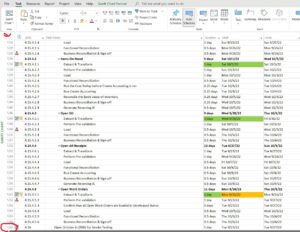
Figure 1. Redacted MS Project schedule view showing WBS structure, sequenced activities, milestone logic, and task-level delivery control.
______________________________________________________________________________________________________________________
Controlling the work: program controls, recovery tracking, and EVM / EVMM-style visibility
Once complex work is underway, the next challenge is control.
Project teams may have task lists, meeting notes, and status updates, but leadership often still lacks a clear picture of progress against plan.
In these situations, delivery control needs to connect schedule movement, workstream progress, completion status, pending updates, variance, and near-term execution windows.
MYT can support outputs such as:
• program controls dashboards
• plan-vs-actual progress views
• workstream status summaries
• variance tracking
• two-day / weekly lookahead views
• cutover readiness tracking
• recovery and stabilization reporting
• EVM-style delivery performance measurement
The control objective is to translate complex project activity into a clearer control surface: what was planned, what actually moved, what remains pending, where variance exists, and which workstreams require attention.
In this sense, EVM-style and EVMM-style tracking are not only financial or schedule concepts; they become practical delivery-management tools when they help stakeholders compare plan, progress, readiness, and execution risk.
In one enterprise recovery context, this type of work included roadmaps, corrective actions, data controls, KPI dashboards, tracking across thousands of MS Project activities, delay/gap analysis, and executive alignment across multiple countries.
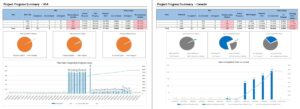
Figure 2. Redacted program controls dashboard translating complex project activity into plan-vs-actual progress, variance, workstream status, and executive visibility.
______________________________________________________________________________________________________________________
Reporting the work: PMO dashboards and executive visibility
A PMO control environment should help decision-makers see what matters.
That does not mean every stakeholder needs every detail. It means the reporting layer should make it easier to understand project health, task status, effort, overdue work, resource allocation, and delivery risk.
MYT can support reporting and performance outputs such as:
• Power BI dashboard concepts
• Dataverse-backed PMO reporting models
• project and task visibility
• effort and resource reporting
• KPI frameworks
• executive summaries
• portfolio reporting views
• roadmap and milestone dashboards
These dashboards are only useful when the project structure, data model, source systems, reporting cadence, and stakeholder decisions behind them are understood.
This is where technical delivery and leadership visibility meet. A good PMO dashboard should not simply decorate project data. It should help people make better decisions.
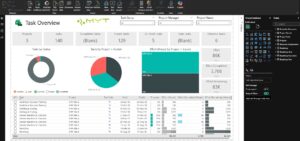
Figure 3. Power BI / Dataverse PMO dashboard showing portfolio-level task visibility, effort, progress, overdue work, and executive reporting structure.
______________________________________________________________________________________________________________________
Governing the environment: Microsoft platform governance and security-aware delivery
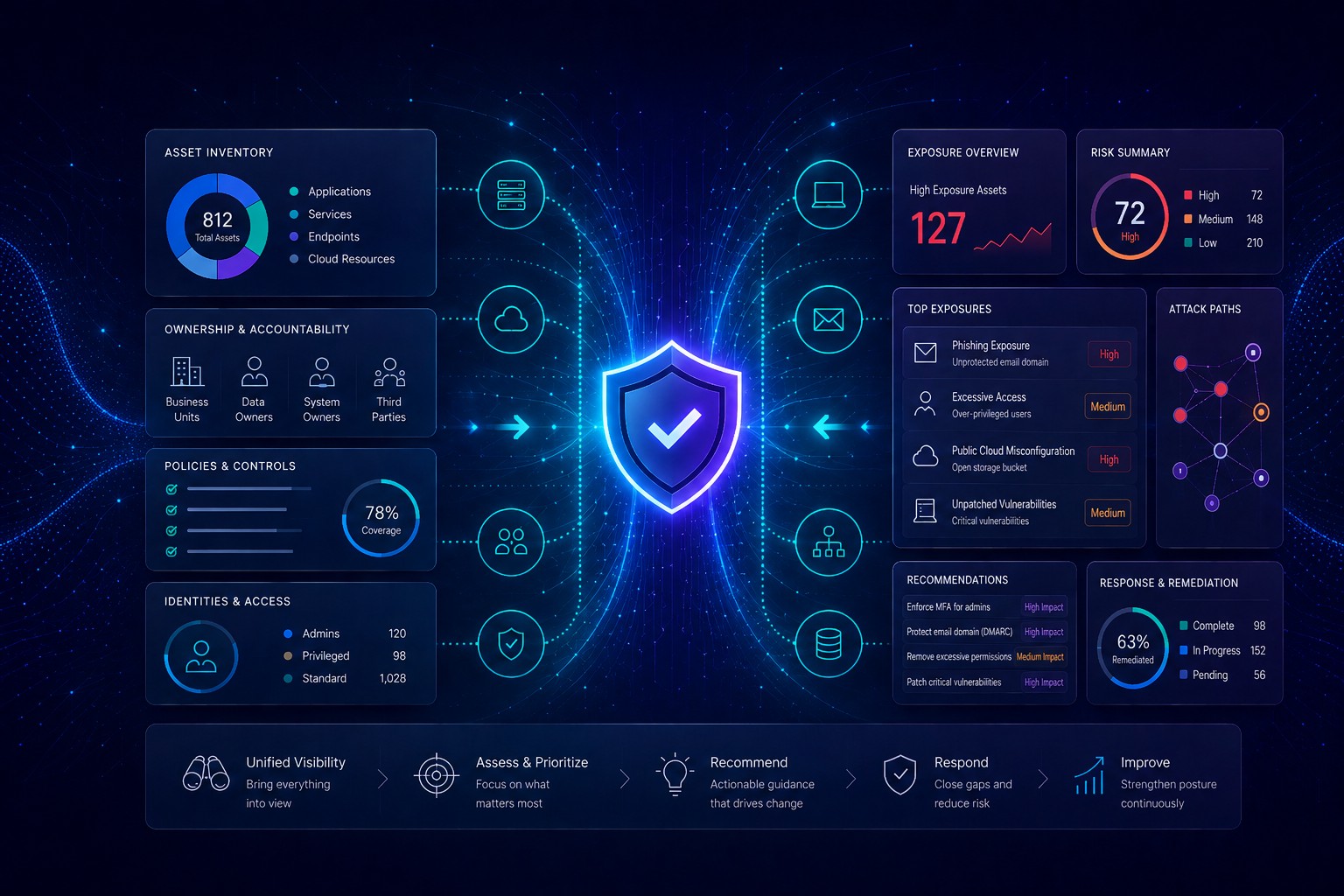
Modern delivery environments increasingly live inside Microsoft 365, Power Platform, Planner, Project, Dataverse, Power BI, Defender, and related administrative surfaces.
That changes the nature of delivery oversight.
Delivery work is no longer tracked only through a schedule. In modern environments, work may span Microsoft 365 services, Power Platform assets, SaaS platforms, ERP / CRM systems, vendors, regions, data environments, and administrative surfaces.
That means delivery oversight may need to understand not only tasks and dates, but also apps, flows, environments, ownership, connectors, permissions, dashboards, identity signals, recommendations, and security-posture indicators.
MYT can support Microsoft governance outputs such as:
• Power Platform inventory review
• Admin Center governance review
• environment and ownership mapping
• app / flow / connector visibility
• governance recommendations
• Microsoft 365 delivery-control review
• Defender / Secure Score / exposure interpretation from a delivery-relevance lens
This does not position PMO work as security operations. The point is delivery relevance: when platform governance, identity, access, ownership, recommendations, or security-posture indicators affect scope, risk, readiness, or decision-making, they need to be visible within the delivery environment.
But delivery oversight becomes stronger when it understands where platform governance, identity, access, ownership, recommendations, and security posture may affect the work.
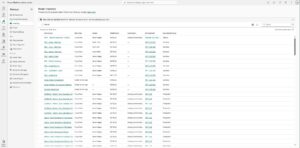
Figure 4A. Power Platform Admin Center inventory view showing platform assets, ownership, environments, item types, and governance visibility.
______________________________________________________________________________________________________________________
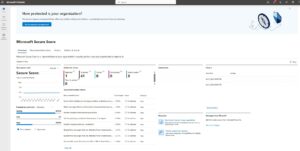
Figure 4B. Redacted Microsoft Defender Secure Score view showing how posture, recommendations, and exposure signals can become delivery-relevant in governed Microsoft environments.
______________________________________________________________________________________________________________________
Understanding the technical layer: data migration, validation, and systems execution
Delivery control is strongest when it understands the systems underneath the plan.
Much of this work sits inside the business and technology systems that run modern organizations: ERP, CRM, SaaS, MRP, identity, reporting, collaboration, infrastructure, and data environments.
Many complex programs involve data migration, ERP / CRM / SaaS / MRP integration, validation, reconciliation, cutover planning, user acceptance testing, workstream sequencing, and technical dependency management.
In those environments, PMO work cannot be separated from the operating reality of the system.
MYT can support technical delivery outputs such as:
• data migration trackers
• validation and reconciliation structures
• cutover workstream tracking
• action-required views
• technical dependency review
• readiness checklists
• issue and escalation tracking
• system-integration control views
These outputs help connect the project plan to the technical work that has to be completed before a system can move safely toward go-live.
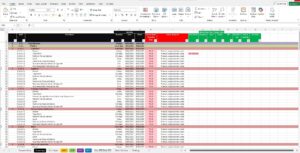
Figure 5. Redacted enterprise data migration tracker showing workstream sequencing, validation, reconciliation, baseline/current-date tracking, and action-required controls.
______________________________________________________________________________________________________________________
How the proof shelf supports the work
MYT’s work is not positioned only through claims. The company maintains a growing proof shelf that includes published governance artifacts, redacted delivery examples, case-study material, PMO control models, Microsoft platform demonstrations, and career evidence mapping.
This piece also sits alongside MYT’s recent Governance Lab work, which explored Power Platform visibility, PMO delivery control, distributed work, Microsoft governance, and security posture. Those artifacts show the broader environment MYT has been studying and building inside; this piece focuses more directly on the practical delivery outputs MYT can produce within that kind of environment.
This allows the public explanation to remain concise while deeper evidence can be provided when a real engagement, task authorization, or qualification review requires it.
For first conversations, the message can remain simple: MYT supports complex IT delivery environments where scope, systems, governance, reporting, stakeholder alignment, and delivery controls need to be made visible and executable.
When a real fit exists, deeper evidence can follow through project examples, redacted visuals, case studies, federal-style experience mapping, or delivery outputs aligned to a task authorization, RFP response, or qualification review.
The outcome is not documentation for its own sake.
The outcome is a clearer operating layer: clearer plans, clearer controls, clearer reporting, clearer ownership, clearer risks, and clearer decisions.
That is the difference between delivery activity and delivery outcomes.