

Over the past few months, I’ve been building and observing a Microsoft Power Platform Center of Excellence (CoE) environment within the MYT sandbox.
In Part 1, I outlined what a CoE actually is—not just a toolkit, but an operating model for governance, visibility, and control.
In Part 2, I moved from concept to reality—showing what the CoE looks like once it’s running, and how it begins to surface patterns across apps, flows, and environments.
Now, In Part 3, the focus shifts from what the system shows—to how it learns to show it: How the system matures over time.
The goal was simple:
Simulate a small multi-user environment, run flows across different users, and observe how governance visibility develops through the CoE dashboards.
At a surface level, everything appeared to be working:
- Flows were created and executed
- Activity was being tracked
- The environment was syncing
But one key element was missing: The Makers—the users responsible for building and running flows—were not appearing in the dashboard.
The Initial Reaction
At first, it felt like something wasn’t working.
I had:
- Logged in as multiple users
- Run and edited flows
- Triggered activity across the system
And yet, the dashboard didn’t reflect it.
But after stepping back and reviewing the system behavior more carefully, it became clear: Nothing was broken. I just didn’t understand how the system reveals itself.
The “Failure” That Wasn’t
Around the same time, I received an automated notification:
“Admin | Sync Flow Errors”

At first glance, this suggested something in the environment was failing. But instead of assuming the system was broken, I traced where the failure actually began.
The first failure occurred in a step attempting to retrieve: User-sharing relationship data
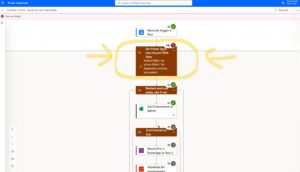
In simple terms, the system was trying to answer: “Who is this flow shared with?”
At this early stage, the answer was: Not enough meaningful relationship data existed yet.
A later step also failed: “Walk the Flows in this Environment”
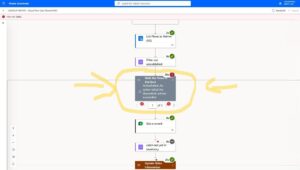
But this wasn’t a separate issue—it was a downstream effect. The earlier dataset was incomplete, so the process couldn’t continue.
At first, it looked like multiple failures. But after tracing the flow, the pattern became clear: There were multiple visible failure points—but only one underlying cause. The environment wasn’t broken. It was still forming the relationships needed to understand itself as this is all in an otherwise setup and discovery phase/period.
What the System Was Actually Doing
This is where the learning clicked.
The CoE isn’t just tracking activity—it’s resolving relationships:
- Who owns what
- Who has access
- Who is actively building
- How flows are shared across user
Those relationships don’t appear instantly.
They depend on:
- Background sync processes
- Identity resolution
- Sharing patterns
- Time
In a brand-new, low-volume environment like this, those signals are still maturing.
The Real Insight
This led to a much clearer understanding: There were multiple failure points—but only one real cause: environment maturity.
This is not a misconfiguration, the flows are not broken, and the setup is not missing or incomplete.
It’s just timing—synch timing.
A Better Way to Think About It
Early on, I expected: Run activity → see results
But the system actually works like this:
Activity → ingestion → processing → relationship resolution → visibility
And that process takes time.
A more accurate way to frame it:
Early CoE dashboards show activity. Mature CoE dashboards show reality.
Why This Matters
In a real enterprise environment, this becomes even more important.
When a CoE is first deployed:
- Initial visibility may appear quickly
- But complete and reliable governance insight takes time
Depending on:
- Environment size
- Activity levels
- Identity complexity
- Sharing relationships
- Sync cycles
That maturity phase isn’t a delay—it’s part of the design.
What I’m Seeing Now
At this stage:
- The CoE is clearly working
- Flows are being tracked
- Sync processes are running
- Errors are being surfaced—and understood
What’s missing is not functionality—it’s fully resolved context. And that context takes time to emerge. And that’s still developing.
A Small Update: When the System Responds
After documenting the observations above, I introduced a small test.
Over the weekend, I logged in as each user and created a simple flow under their identity—just enough to simulate real usage. Shortly after, the CoE dashboard began to change. The “Makers” view, which had remained unpopulated, now reflected multiple users—each associated with their own flow activity.

It’s important to be careful in how this is interpreted. This was not a controlled experiment, nor is it intended to prove causation.
However, it does highlight something subtle but important: In early-stage environments, systems like the CoE don’t just respond to configuration—they respond to activity. By introducing simple, user-level interactions, the environment began to reflect a more complete picture of ownership and usage.
Whether this change was triggered directly by these actions or simply aligned with backend synchronization timing is less important than the broader takeaway, that meaningful visibility tends to emerge when systems begin to observe real patterns—not just setup.
________________________________________________________________________________________________
Next – in Part 4
As Makers continue to stabilize and patterns become clearer, the next step is to examine how governance signals begin to take shape in practice.
________________________________________________________________________________________________